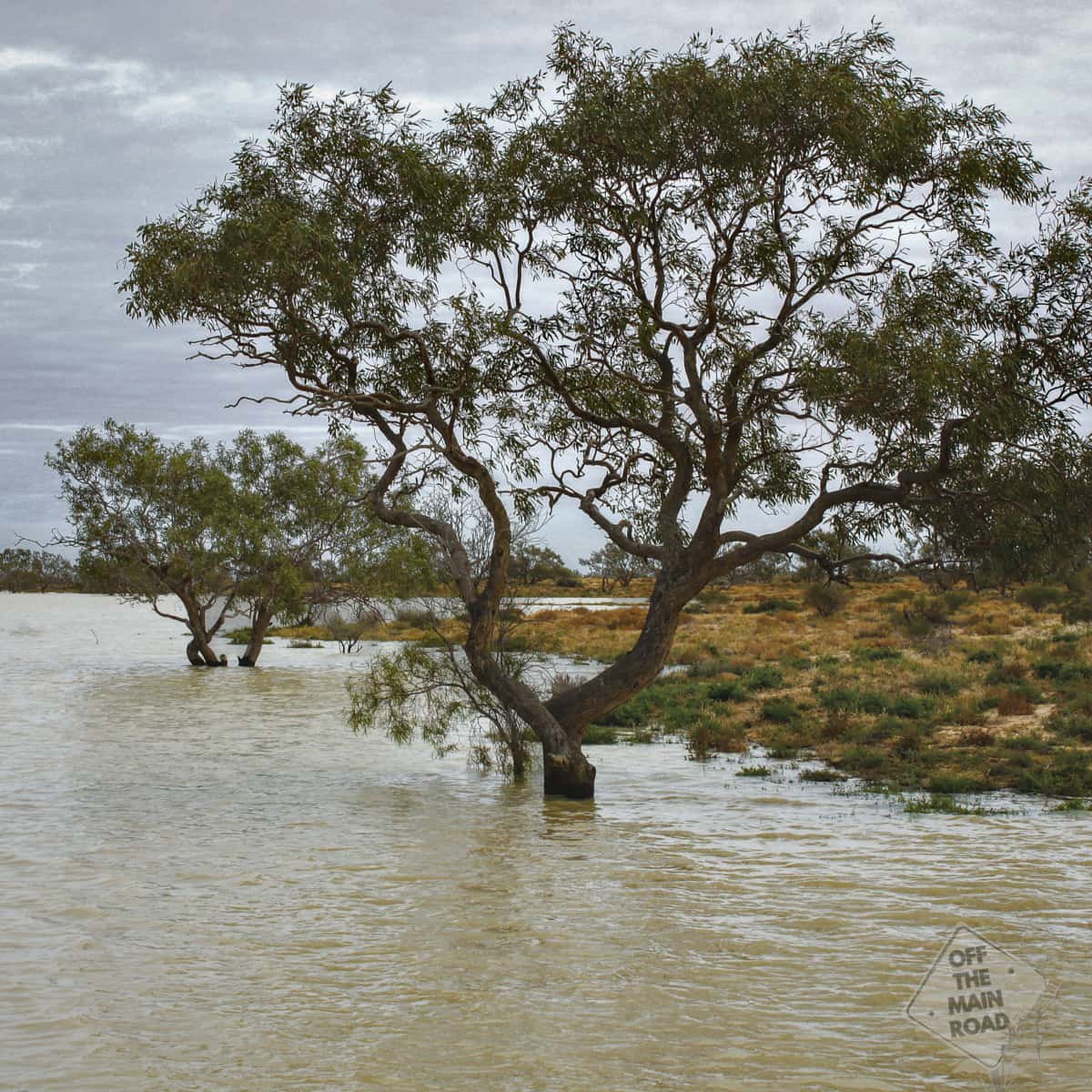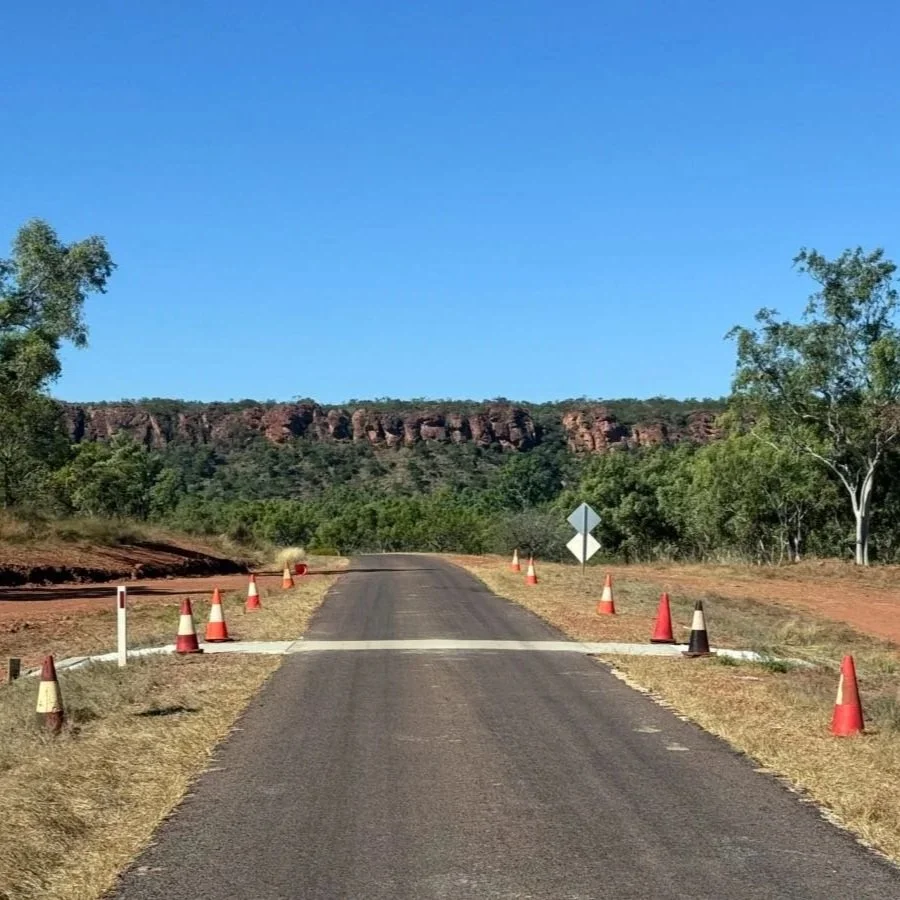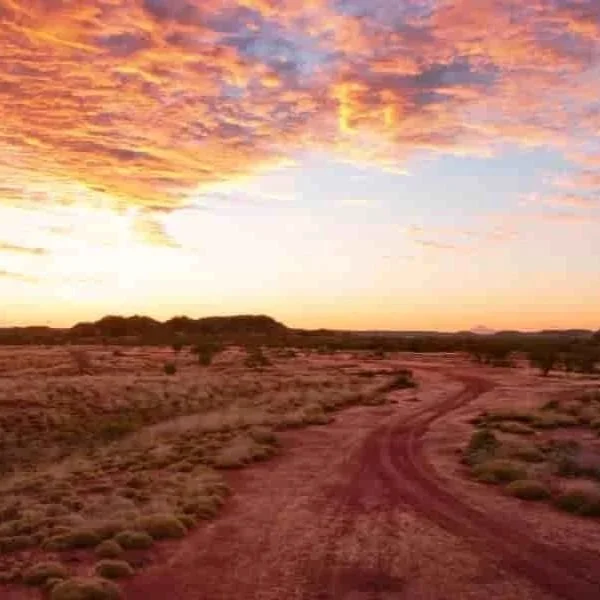
The stretch from Cloncurry to Charters Towers came with a warning label: bring patience and a sense of humour. We set off down the Overlander Way under a sun that felt personal, the kind that follows you across the sky. Temperatures hit 41°C, and even the horizon seemed to shimmer in protest.
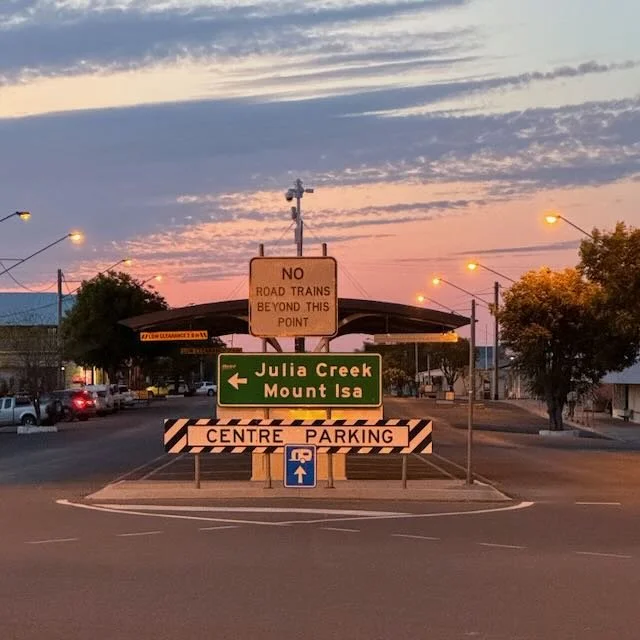
We stopped for morning tea in Julia Creek, but the famous artesian baths didn’t tempt us. Forty dollars for a 45-minute soak, or an Instagram photo, felt a bit rich for a couple of road-weary travellers. So we stretched our legs, enjoyed morning tea at the local cafe, and pressed on, laughing that maybe we were turning into tight arses after all. We did check out the RV camp just out of town, but the heat and Neil’s perpetual fear of snakes saw us continue down the road.
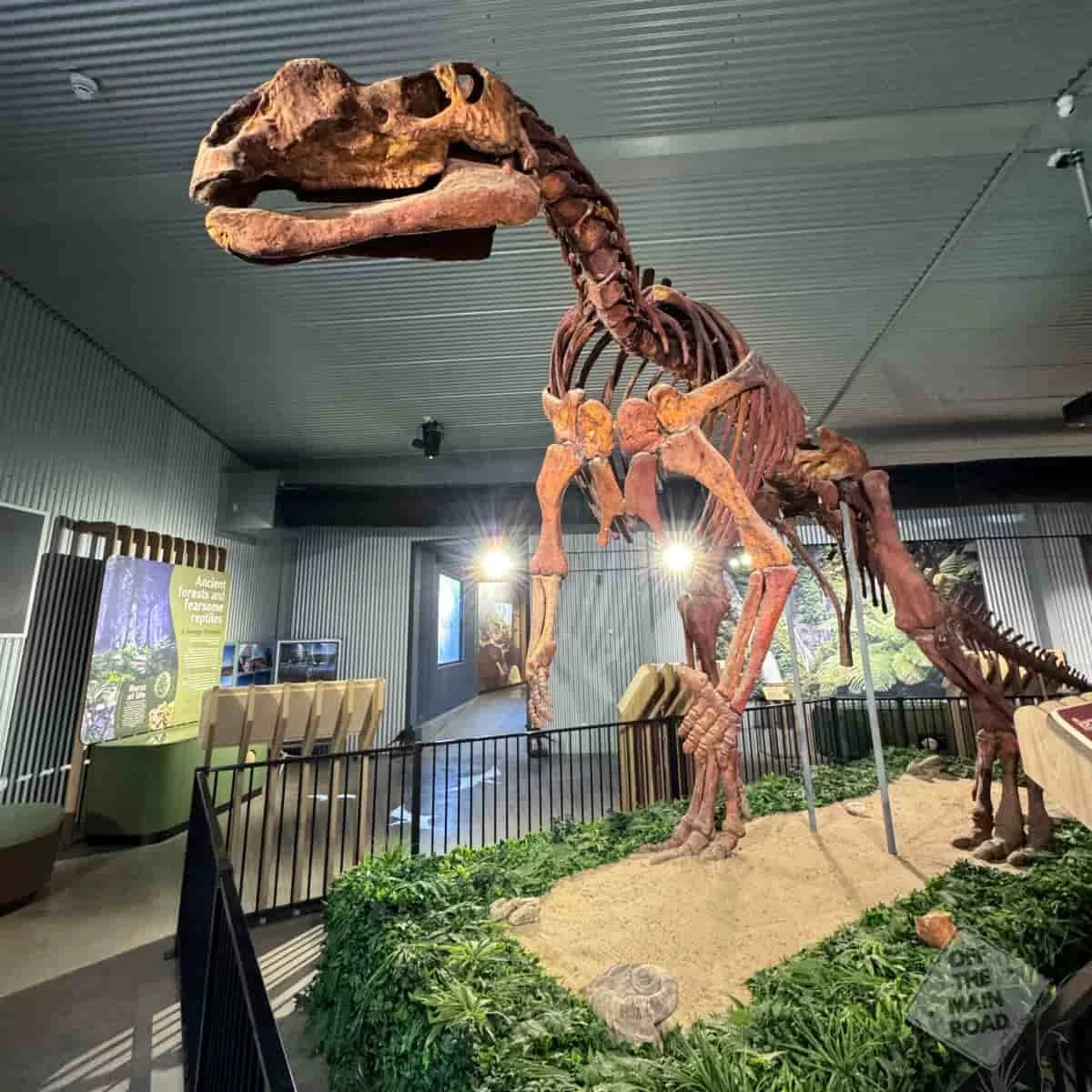
By the time we rolled into Richmond, the heat was still relentless. We parked by the lake and called it home for two nights, spending most of our time doing very little, just trying to stay cool. Kronosaurus Korner looked interesting, but forty dollars a head was again enough to send us back to the lake (and Neil to the pub) with a cold drink. We might be becoming frugal, but the shade and a swim felt just as rewarding.
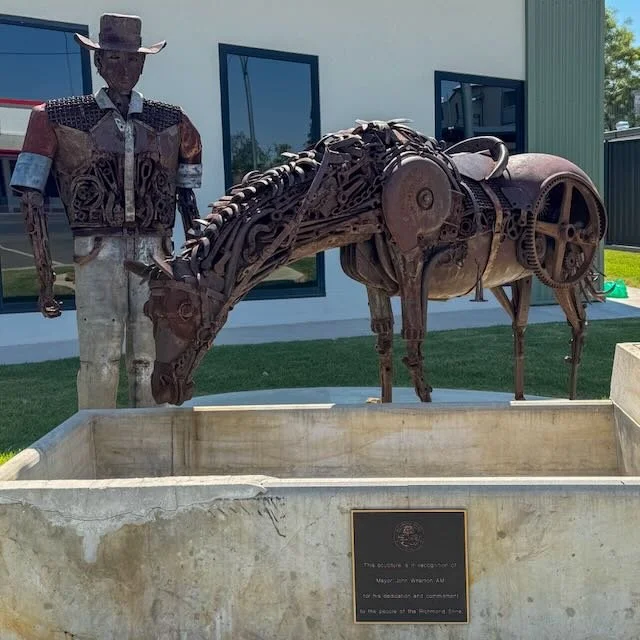
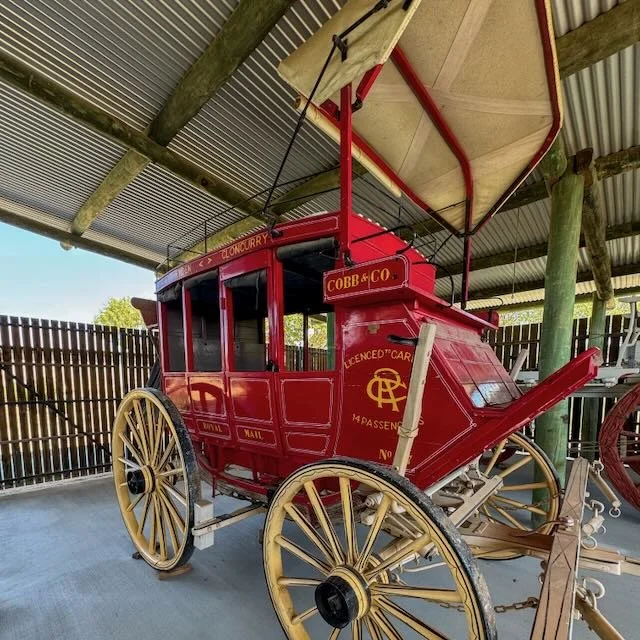
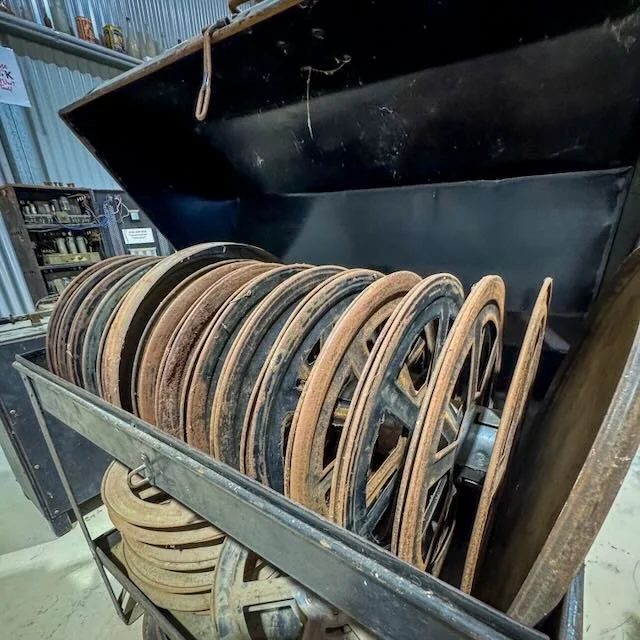
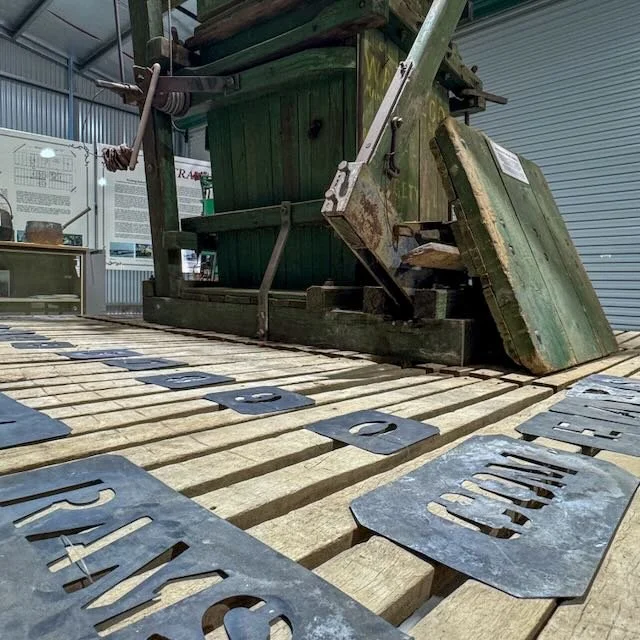
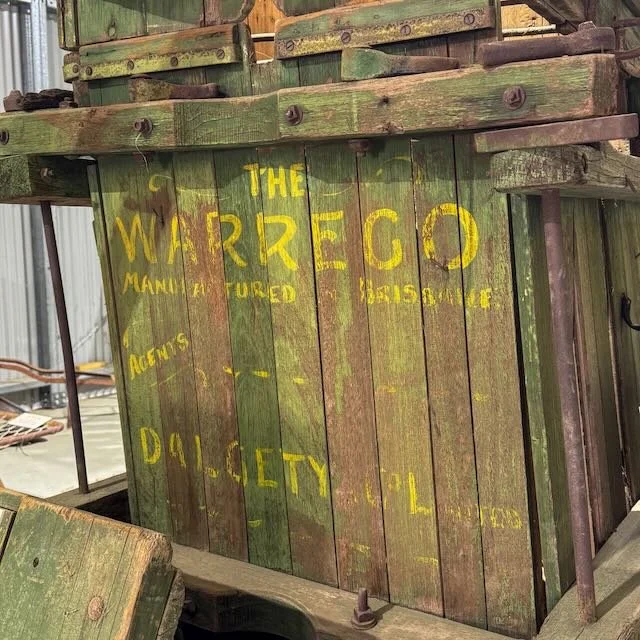
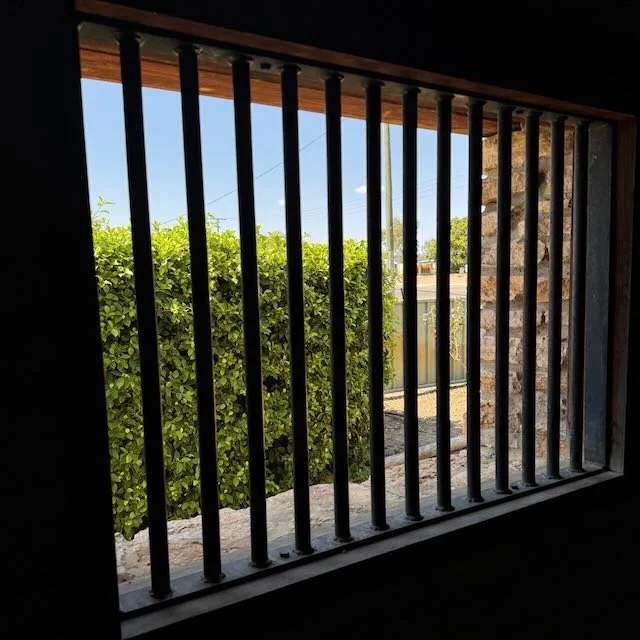
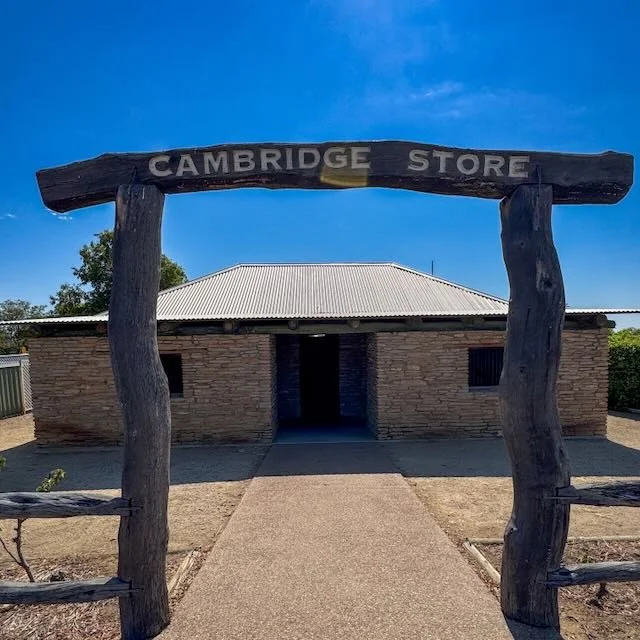
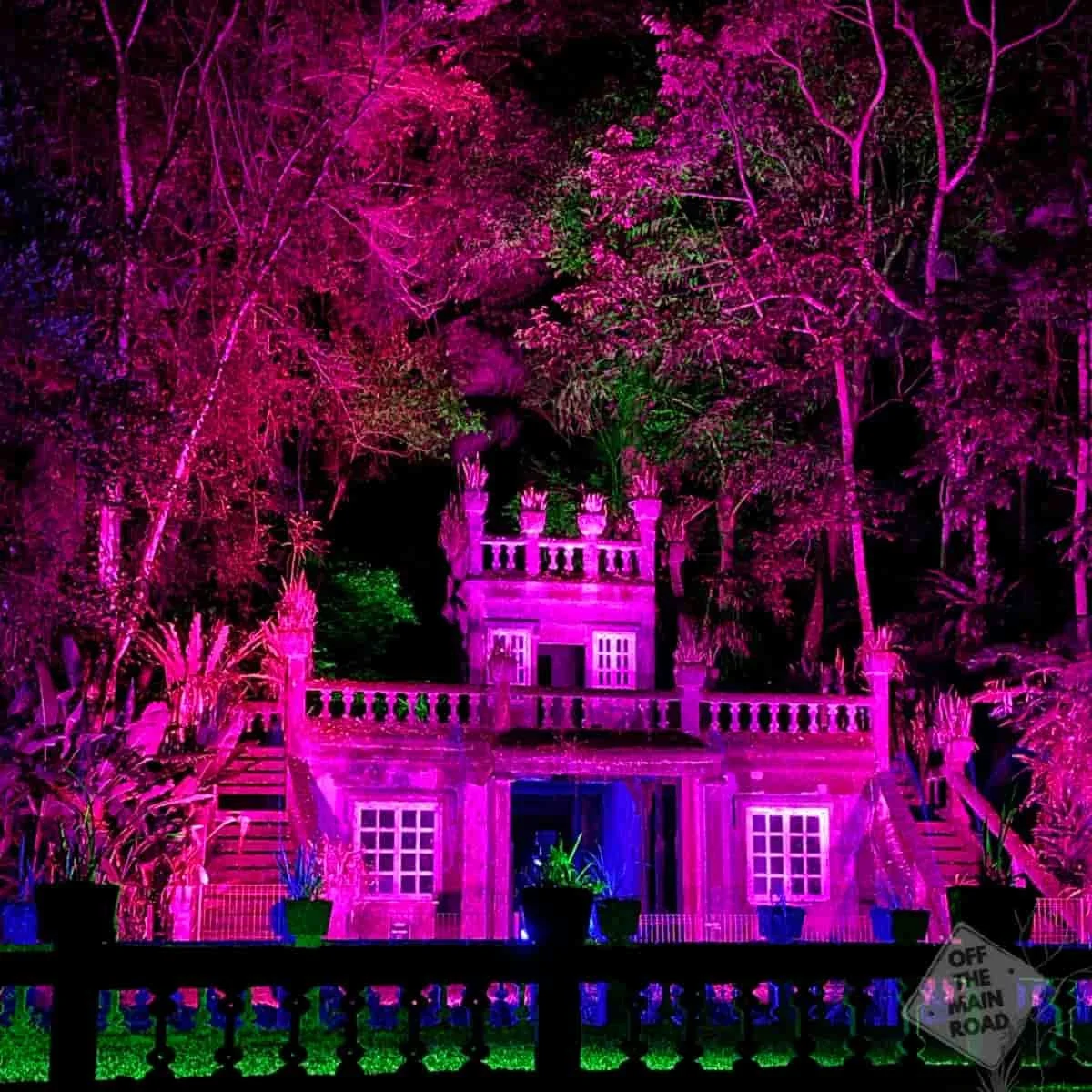
One morning, before the temperature climbed into the forties, we wandered over to the Cambridge Downs Heritage Display Centre in Richmond. The building itself is a full-scale replica of a 19th-century homestead, built from local stone, and it’s beautifully done. Inside, there’s a small but fascinating collection of artefacts, old photographs, and stories from the early pastoral days.
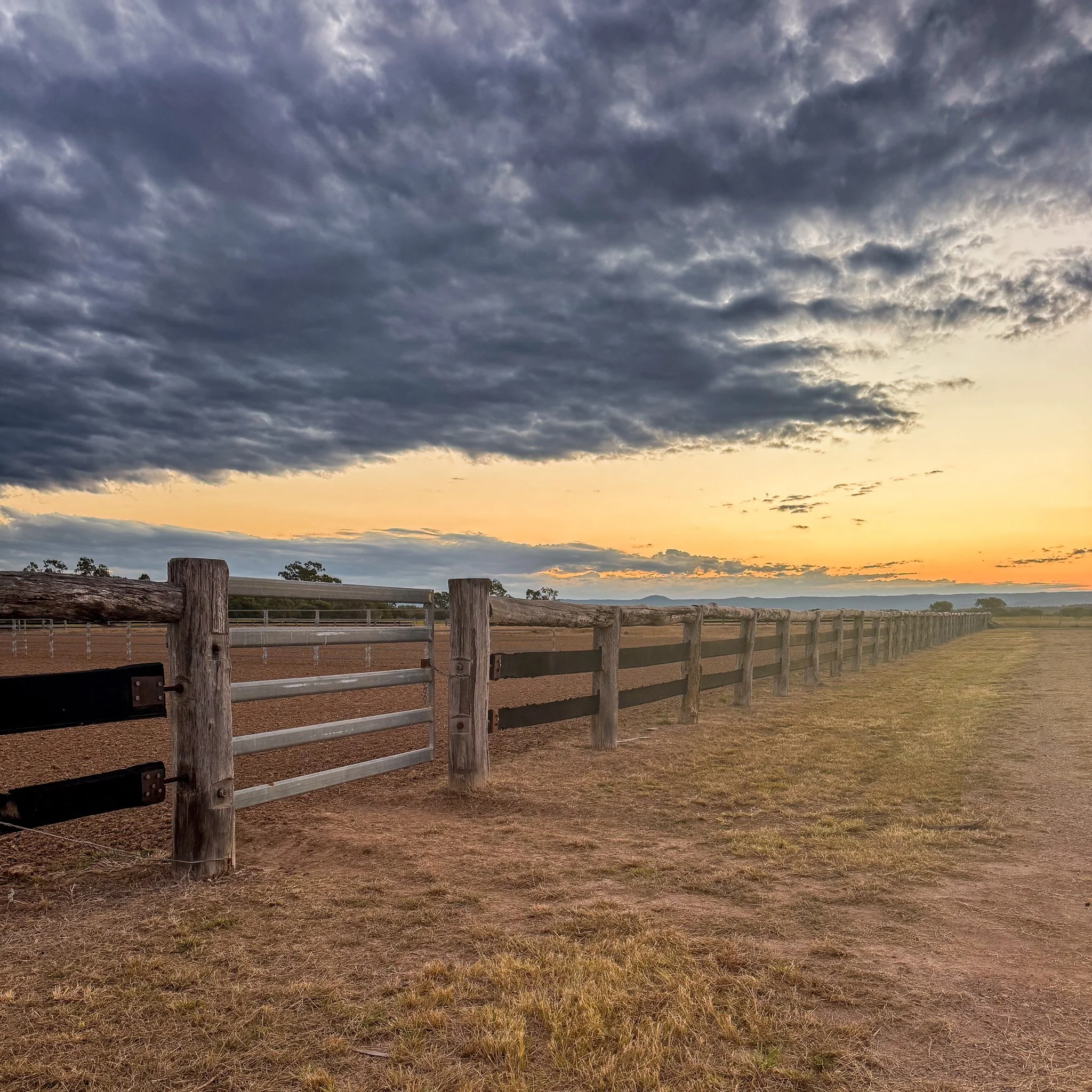
The next stretch, through Hughenden, offered more of the same: flat, open cattle country and a sun that didn’t quit. The thermometer dropped to a mere 38 degrees, which we took as a small win. By then, Zoe was restless and dreaming of grass under her paws instead of her bed under the air conditioner.
We limped into Charters Towers late in the day, one tyre slowly deflating, the pressure monitor beeping like a trapped cicada, and three slightly cranky travellers ready for a cold drink and cooler weather. But that’s life on the road, not every day brings waterfalls or perfect campsites. Sometimes it’s just dust, heat, and a reminder that adventure isn’t always glamorous. Perhaps we will come back this way when the weather is cooler, and it will feel completely different.
👉 Want more unfiltered stories from the road — the good, the hot, and the occasionally cranky? Join our newsletter here.
Julia Creek, Richmond and Hughenden
These three small towns sit along the Overlander Way, connecting the outback with the coast. Each has its own rhythm — Julia Creek with its artesian baths and small-town charm, Richmond with its lake and dinosaur history, and Hughenden, a classic outback service town surrounded by cattle country. Together, they make up one of Queensland’s most iconic inland drives, offering glimpses of life lived far from the coast.
How to Get There
The Overlander Way runs from Cloncurry to Townsville, stretching over 1,500 kilometres of wide, open road. Julia Creek lies 138 kilometres east of Cloncurry, Richmond another 148 kilometres beyond that, and Hughenden about 115 kilometres further on. The road is sealed and easy to navigate, though some sections can be rough — and long.
What to See, Tours and Activities
What we did:
Julia Creek – Stopped for morning tea, admired the landscape, and moved on before we melted.
Richmond – Camped by the lake for two nights, swimming, reading, and watching the world go by.
Hughenden – Stopped for a break, stretched our legs, and pushed on towards cooler weather.
Other highlights you might explore:
Julia Creek Artesian Baths – Private tubs overlooking the plains (bookings essential).
Kronosaurus Korner (Richmond) – A fossil museum showcasing prehistoric marine reptiles.
Flinders Discovery Centre (Hughenden) – Local history, fossils, and information on the region’s geology.
The Overlander Way Drive – A classic Queensland route linking the inland to the reef.
When to Visit
The cooler months (April to September) are best for travelling this route. Summer brings fierce heat, heavy storms, and road mirages that make you question reality. If you’re visiting in the warmer months, start early, carry plenty of water, and don’t expect to move fast.
Final Thoughts
This leg of the journey reminded us that not every stop is a postcard moment, sometimes the stories come from the challenges. Between the heat, the endless road, and the occasional bout of frugality, we found laughter and resilience. Out here, that’s worth more than any photo.
What’s Nearby
Before setting out on the Overlander Way, we spent time in Cloncurry, soaking up its history and red-dirt charm. From Hughenden, the road carried us east toward Charters Towers, chasing cooler air, a working tyre, and maybe a cold drink to toast the miles behind us.
✨ Join our newsletter for stories, secret spots, and off-the-main-road adventures that don’t make the guidebooks — delivered straight to your inbox. Sign up here.
Other updates you may like…
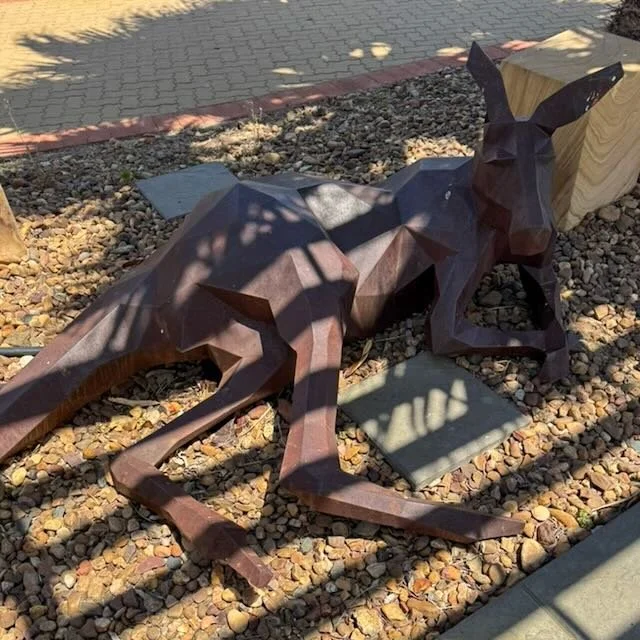
The heat sent Zoe (and us) east, and Hughenden was the perfect stop: a free RV camp, Hughie the Muttaburrasaurus, town street art, and a coolibah tree blazed by explorers hunting Burke and Wills.
Most people drive through Batchelor on the way to Litchfield. Stop, and you find a miniature Czech castle built by a homesick miner, a Cold War uranium mine, and a wartime airfield with a famous visitor.
Between Mount Isa and Cloncurry sit the empty streets of Mary Kathleen, a uranium mining town built in the 1950s, sold off entirely at auction in 1983, and now a ghostly grid of slabs and silence. Perfect for camping!
A chain of World War Two airstrips lines the Stuart Highway on the run to Darwin. We stopped at Strauss and Gorrie, once the country's biggest airbase, and drove past the rest, each named for a lost pilot.
Our airboat trip with Northern Territory Airboats gave us a fast look at the Bynoe wetlands. Crocodiles on the banks, birdlife across the floodplains and a guide who knew the country well. A relaxed Top End wildlife experience.
We drove to Fogg Dam near Darwin expecting a few ducks and found hundreds of birds, three crocodiles, and two tourists we probably saved from becoming breakfast on the closed, croc-lined dam wall.
We broke the curse the only way we could, by cheating and flying. A doorless chopper, sandstone towers older than almost anything on earth, and a walk through a Lost City with no one else in sight.
Every expedition needs a curse, and ours began the moment we left Mount Isa chasing the Lost Cities. Plagues of bugs, biblical rain, a brutal road, and a mysterious rash.
Three days out to Boulia via Poddy Creek and the Middleton Hotel, the Min Min Encounter, outback sunsets and no actual Min Min sightings. Then north to a spectacular free camp at Dajarra Dam on the way to Mount Isa.
After three visits, here's what we'd actually send a friend to do in Longreach! Qantas history, outback rail and river tours, and a stockman's show. Not everything, just our favourites.
Back in Longreach for our third visit. Outback rail adventures, a sunset cruise on the Thomson River, the Longreach Races, new Akubras, and the friendliest welcome yet.
The Matilda Way is a 1,900-kilometre touring route from Bourke in New South Wales to Karumba on the Gulf of Carpentaria, passing through the heart of outback Queensland via Charleville, Longreach and Winton.
Blackall’s Historical Woolscour is the only surviving steam-powered woolscour in Australia, operating since 1908. Add Jackie Howe’s unbroken shearing record and a free camp on the Barcoo River, and you have one of outback Queensland’s best stops.
Tambo delivers more than it advertises — Tambo Teddies and a station side quest, chicken races that got out of hand, and the site of Qantas’s first fatal crash in 1927. A small town with a lot going on.
Four visits to Charleville and still finding new things — the Angellala Creek explosion site, the Airfield Museum, the Bureau of Meteorology weather balloon and the WWII quarry that built the airport runways.
From the Cosmos Centre and Bilby Experience to the Airfield Museum, WWII Secret Base, Outback Date Farm, and the Angellala Creek explosion site. There’s a lot going on!
Halfway between Cunnamulla and Charleville, Wyandra is a quiet railway town on the Warrego River with a sandy beach, outback burgers, a peaceful camp and sunsets good enough for a calendar cover.
An overnight pub camp at Enngonia, then north to Cunnamulla; the Robbers Tree, the All Aboard rail show, a day at the races for Neil and artesian hot springs for Cameron. A weekend well spent.
The Kidman Way is a 644-kilometre sealed touring route through inland NSW, from Jerilderie in the south to Barringun on the Queensland border. Named after the 'Cattle King', it passes through Griffith, Cobar and Bourke.
Five rain-soaked days at Nyngan Weir and then north to Bourke, the Darling River’s great port, Fred Hollows’ resting place, an Afghan mosque in the outback, and a town that rewards anyone who slows down.
From Melbourne via Warrnambool and St Arnaud to Hay, a town that keeps earning return visits. Free camping on the Murrumbidgee, a gaol with many lives, and one of regional NSW’s most joyful festivals.
A Victorian summer with family and friends behind us, a polar cold snap nudging us north, and rising fuel prices reshaping how we travel. Time to head out again and see what's up the road.
A slow morning in the mist at Warrnambool's historic Botanic Gardens, a drive out to Hopkins Falls running at full strength, and an afternoon browsing Fletcher Jones Market.
Two nights on the Barwon River at Winchelsea’s free camp, and a guided tour of Barwon Park Mansion, the bluestone homestead built to impress a duke, by the man who gave Australia its rabbit problem.
Our favourite way to experience Melbourne is on foot, looping between the State Library, NGV, laneways, arcades, gardens and the Yarra, with a tram ride to St Kilda and the occasional MSO concert.
First visits feel longer because novelty stretches time. Returning compresses it. This reflection explores how attention shapes memory, and how slow travel allows familiar places to feel deeper rather than shorter.
J Ward in Ararat began as a gold rush gaol before becoming Victoria’s Criminally Insane Division. A guided tour reveals bluestone cells, preserved gallows, and a confronting chapter in Australia’s justice and mental health history.
Aradale in Ararat is one of Australia’s largest former psychiatric hospitals. A guided history tour reveals confronting stories, evolving mental health care, and the complex legacy of an institution that operated for more than a century.
A moving degustation through Bellarine farmland, The Q Train pairs heritage rail with seriously good food. From steam departures to thoughtful non-alcoholic pairings, it’s one of Victoria’s most memorable regional dining experiences.
Cameron is a travel writer, photographer, and freelance copywriter with more than fifteen years of experience crafting stories that connect people and place. Travelling full-time on the road in a motorhome with his partner, he documents Australia’s quieter corners through Off the Main Road, a travel journal devoted to the towns, landscapes, and characters often overlooked by the tourist trail.
His writing blends observation with lived experience, drawing on a professional background in brand storytelling. With a photographer’s instinct and a writer’s eye for detail, Cameron captures moments that reveal the character of regional Australia, from weathered towns and open landscapes to the honest texture of life on the road.


A 2010 camping trip with my dad into the outback: Mungo’s Walls of China, the Birdsville Track cut by a flooded Cooper Creek, the government punt, and Lake Eyre holding water. The trip that started everything.